Start with one audience and one urgent problem
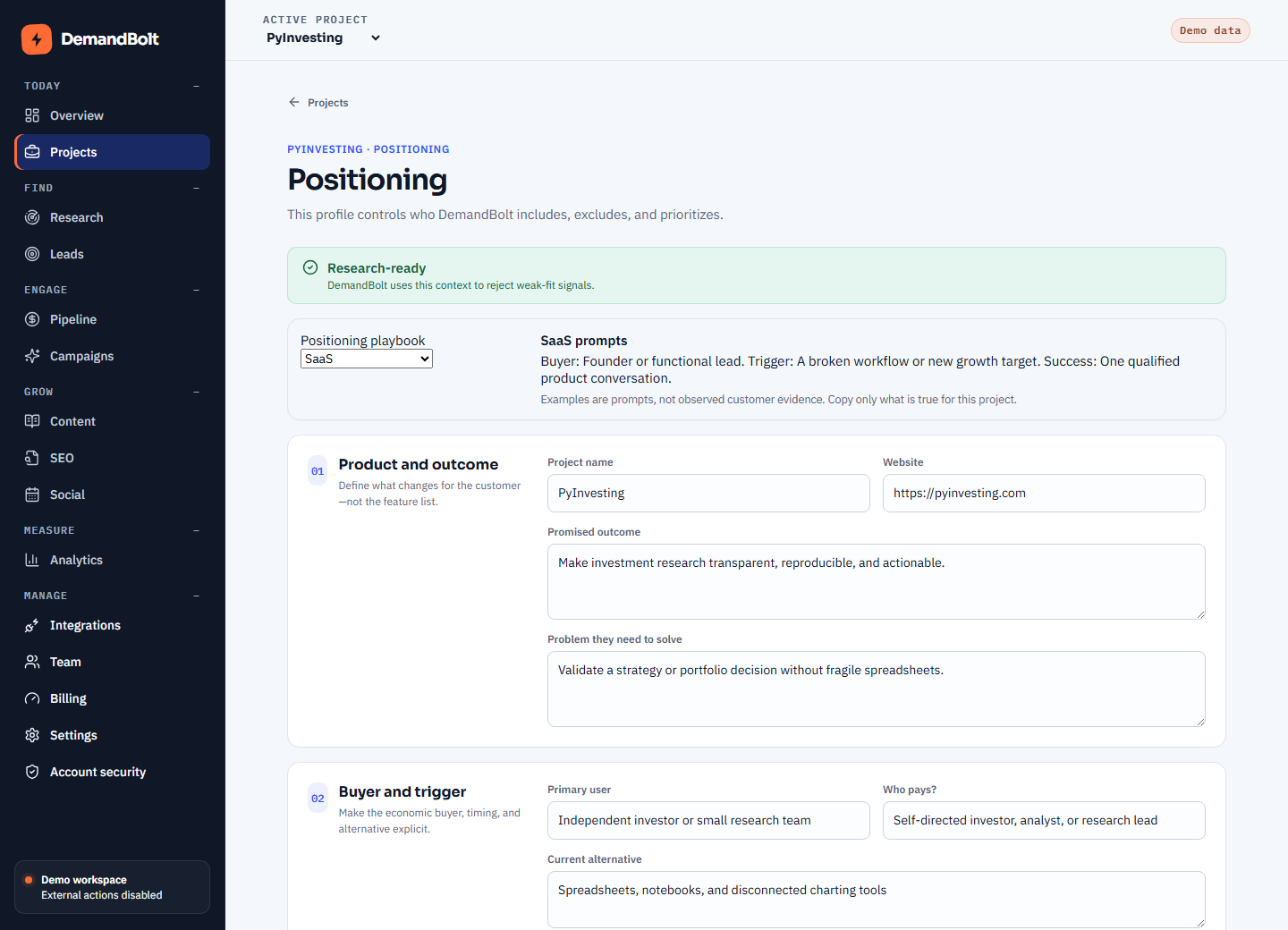
Describe the product, the person who uses it, the person who pays, and the event that makes the problem urgent. Those people may be different. A student might use a learning product while a parent pays; an analyst might use a research tool while a team approves the purchase.
In DemandBolt, each project keeps its own positioning, sources, prospects, and outcomes. An editable product brief turns a broad idea into a research question you can investigate.
- Name the task your buyer is struggling to complete.
- Record their current workaround and the cost of leaving it alone.
- Write down who should be excluded, even when they appear interested.
See the source before you accept the prospect
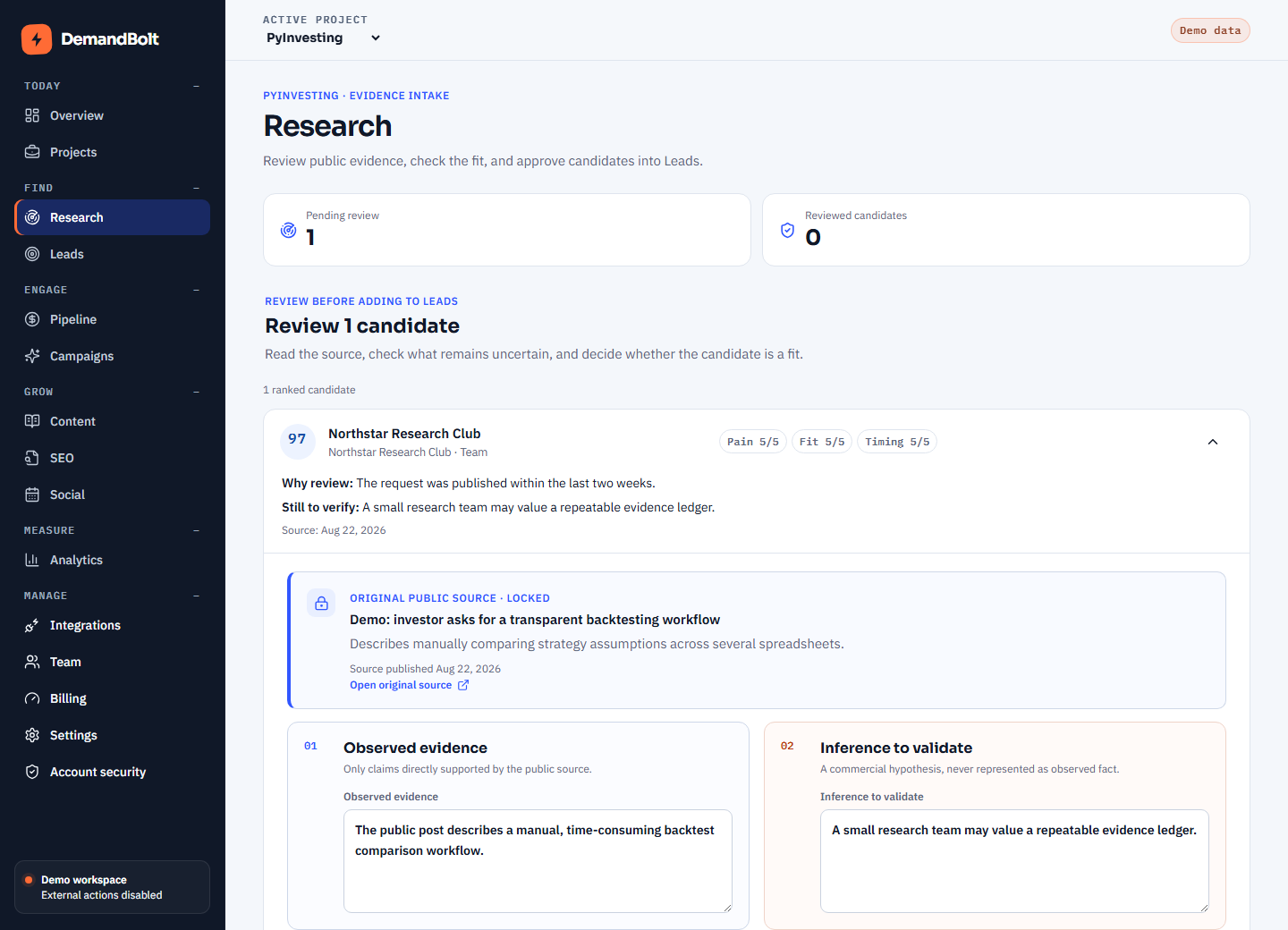
Public research can surface useful conversations, but a mention is only the beginning. Read the source, check its date, and decide whether the writer describes the problem your product solves. Keep observed facts separate from your commercial interpretation.
The review queue lets you inspect a candidate, edit your interpretation, and record an approval or rejection. Approval moves an appropriate prospect into the CRM. A score helps order your work; it does not certify intent or predict a sale.
Prepare a small, relevant next action
Carry the selected source into a campaign draft so the opener refers to something the person actually said. A specific question is often a better first step than a long product pitch. Preview the exact copy and recipient before approving delivery.
Email delivery requires a connected provider and explicit recipients. Social content can be prepared and exported; publishing availability depends on the channel and its verified connection. The interface distinguishes a draft, an approved action, and a provider-confirmed result.
Learn from outcomes you can verify
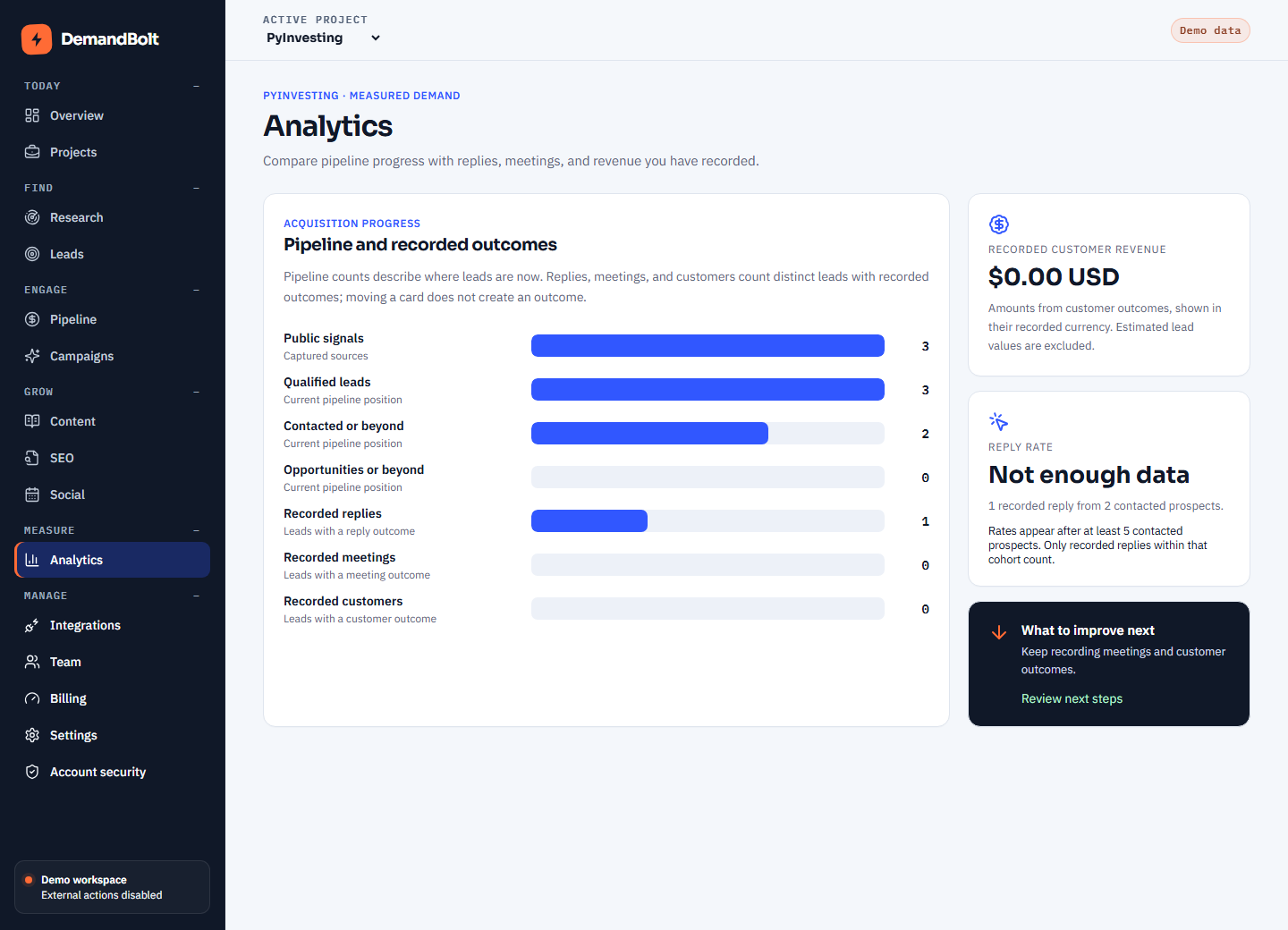
Record a substantive reply, meeting, trial, customer, or loss when it happens. A promising profile is not revenue. Compare the source, problem, message, and result to decide what to repeat.
For a first experiment, choose one audience, review a small shortlist, and set a decision date. If responses reveal the wrong problem, revise the brief. If trials start but people do not return, investigate activation before expanding outreach.
When this workflow is a good fit
DemandBolt fits founders who can identify a specific customer problem, find relevant public evidence, and offer a concrete next step. It is also useful when you run several products and need to keep their acquisition work separate.
If your customers rarely discuss the problem in public, start with interviews, partners, or existing relationships. You can still record those opportunities and outcomes, but public-signal research may not be your strongest acquisition channel.